v1.84: Rome votes and households plan
July 29, 2026 · Fallowborn devlog
Versions 1.76.0 through 1.84.1 turn the Catholic Church into a political institution and make large households much easier to direct.
The Pope is no longer only a ruler attached to Rome. Bishops hold personal sees, Cardinals carry their own loyalties into elections, and Papal authority can split Catholic realms between rival obediences. At home, a single household ledger now brings education, work, offices, marriage, and equipment together.
Rome has a constitution
The Papal office now becomes vacant when its holder dies. The College of Cardinals gathers to elect a successor under rules that change with the date. Early elections require outside assent, the Cardinal Bishops later control the shortlist, equal suffrage arrives in 1179, and elections from 1274 use an enclosed conclave with a two-thirds threshold.
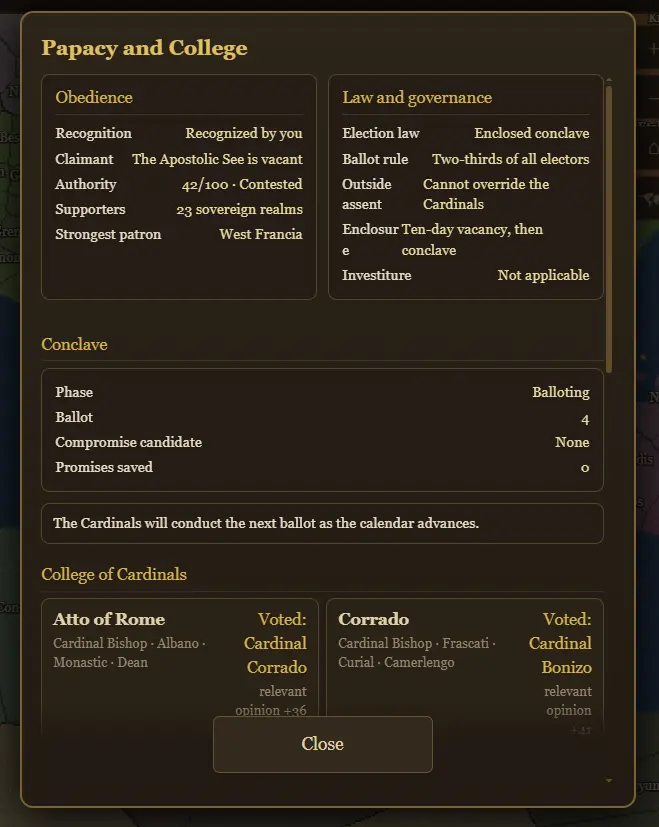
Every Cardinal is a living character with an order, church title, political bloc, relationships, residence, and vote. A player Cardinal chooses how to approach each ballot: negotiate with an elector, appeal to doctrine, promise a benefice, invoke secular backing while the doors remain open, or withdraw and endorse another candidate. Electors weigh relationships, ability, piety, factional sympathy, culture, promises, and patrons.
The election law is only one part of the new Papacy. Authority now determines whether an obedience can impose sanctions, demand investiture, call a great holy war, or summon a general council. Popes can hold consistories, receive rulers, send legates, bargain for recognition, excommunicate offenders, and answer petitions for absolution.
If a weak election remains divided, a rival claimant can emerge with Cardinals and a sovereign patron behind them. Catholic rulers then choose which obedience they recognize. Each side keeps its own Pope, College, authority, supporters, and sanctions until submission, political collapse, or a council reunites the Church.
A bishopric is an office, not a county
Catholic religious careers now lead to contested appointments. Abbots and Abbesses are elected, while a qualified Abbot or Archpriest can petition for a bishopric. The appointing authority depends on the realm’s investiture settlement: a secular liege under lay investiture, the recognized Pope under canonical investiture, or both sides under a concordat.
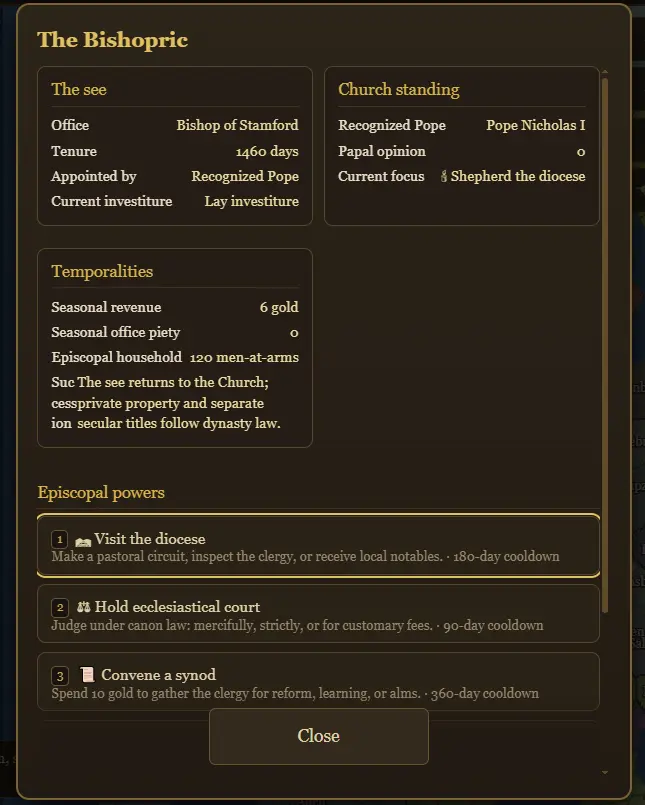
A Bishop receives a personal, non-hereditary see with seasonal revenue, an episcopal household, two new focuses, four church powers, and dedicated events. Visiting the diocese, holding an ecclesiastical court, convening a synod, and petitioning the Pope give the office a life beyond its standing bonus. Secular land and a bishopric can coexist, but the see returns to the Church when its holder becomes Pope or dies.
Bishops can petition for the red hat and join the College. A Cardinal elected Pope hands inheritable secular titles to the lawful heir while the Papal life continues with its own authority, treasury, and obligations. When that Pope dies, the dynasty resumes through its living successor while the College begins another election.
One table for the whole household
The Network tab now opens a Household Plan for the household head, resident family, and paid retainers. Each row shows education, instruction and fees, work and religious standing, enterprise or office assignments, match eligibility, and equipped-item capacity.
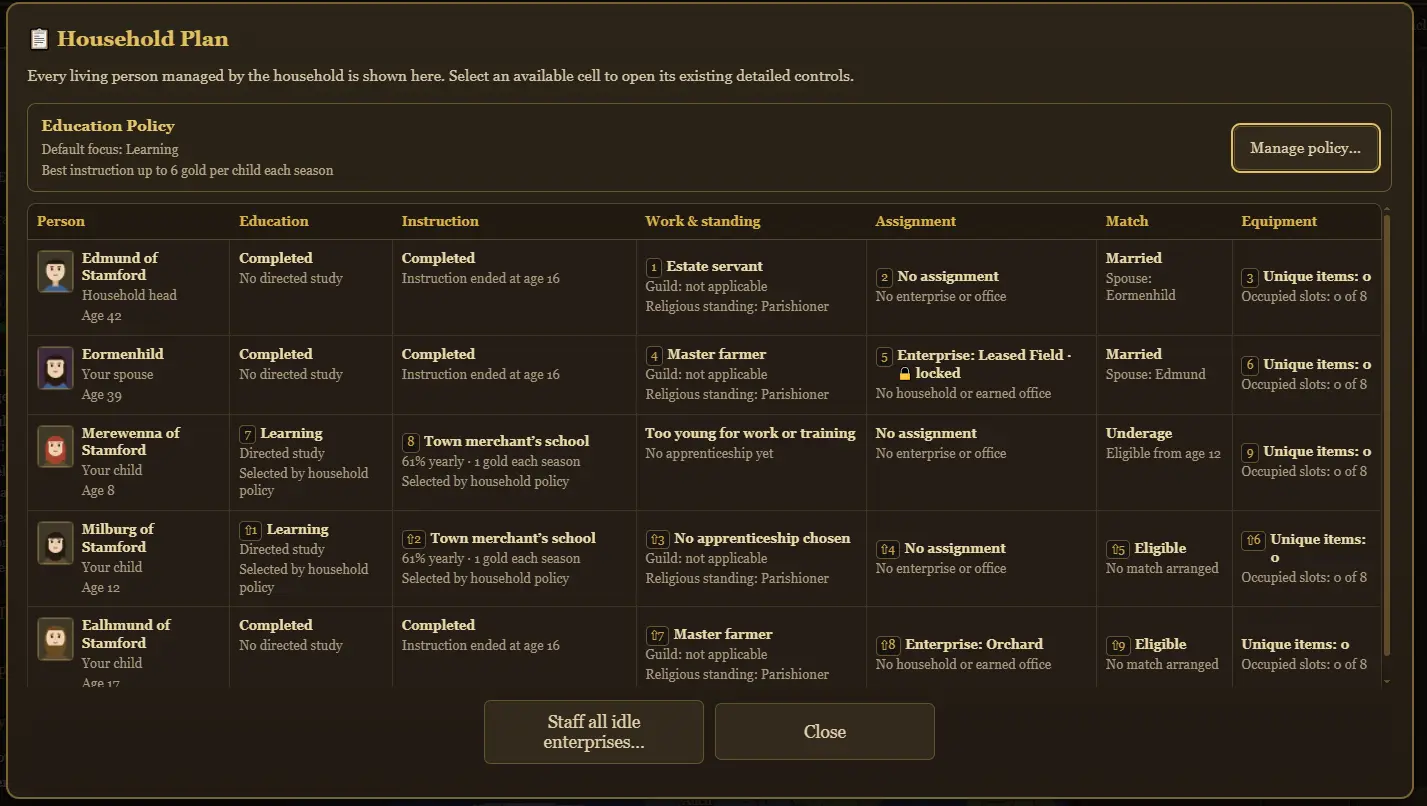
The table is not a second set of household rules. Selecting an available cell opens the same detailed control used on character and enterprise sheets, then returns to a refreshed overview.
Education Policy can fill an unassigned child’s focus and choose the strongest available school, known tutor, or home instruction beneath a seasonal fee cap. It previews the immediate plan before saving, does not replace manual choices, and passes to the next household head.
Idle enterprises now have a similar staffing assistant. It finds the highest-yield arrangement across eligible workers, respects every locked assignment, explains unresolved businesses, and previews all changes before they are applied. Reviewing or applying the plan spends neither time nor money.
The same consolidation reaches the Deeds panel. An Ongoing commitments ledger gathers the current daily focus, relationship attention, political attention, research, travel, and financial contracts, with each row linking to its existing control. Settings can keep all daily focuses together or hide the ledger without cancelling anything.
A ruler can choose the seat
A Count, Duke, King, or Emperor may now move their capital and household home to another directly held county once per lifetime. The Land panel shows the choice on every eligible demesne county, along with the reasons it may currently be blocked.
The move costs 200 prestige and reduces local popular opinion and direct-vassal Favor by 15. It cannot be made while travelling, fighting a personal war, or serving in an active campaign. County ownership, buildings, holdings, and other property remain where they are. The decision changes the political seat and the family’s home rather than carrying the old county with them.
Balance and patch notes
- Great holy-war recruitment: A sovereign campaign host can receive 120 free pilgrims once per campaign. Later offers can add 150 mercenaries for 15 gold, 75 mounted fighters for 20 gold, or 100 adventuring men-at-arms for 25 gold. These troops affect the live host immediately and disappear when it disperses.
- Voluntary de-mustering: A player host in an ordinary war can stand down without ending the war. All surviving troops return from a directly held county, half return from elsewhere in the sovereign realm, and none return from foreign soil. Great holy-war hosts remain bound by their vows.
- Caliphate succession: A Sunni King or Emperor with at least six directly held counties can challenge a sitting Caliph in an office-only succession war. The Caliphate changes hands without transferring the defeated ruler’s land.
- Clearer choices and effects: Tutor, worker, retainer, and council pickers now use consistent candidate cards. Holdings, enterprises, buildings, items, technologies, and temporary modifiers use shared summaries for costs, effects, scope, duration, and transfer rules.
- Succession and mobile fixes: Pregnancies now continue correctly across succession, preserving both recorded parents. Mobile rulers can keep the county selector visible while raising multiple buildings across their demesne.
- Browser regression coverage now exercises startup, saves, journeys, great holy wars, household commitments, buildings, and capital relocation.
- Keyboard navigation: Dialogs now keep focus inside the active sheet and return it reliably to the control that opened it.
Bugs & ideas: GitHub issues · argue about balance: Discord · keep the barley free: Ko-fi