Versions 1.168.0 through 1.176.2 add reformable doctrines, broader marriage search, a direct map-filter chooser, and historical equipment. Local communities also change over time, and peace agreements now establish mutual truces.
Doctrine reform
Open Faith or Culture from Self to inspect your current doctrines and reform them individually. Faith reforms spend piety; culture reforms spend prestige. Choices come from traditions you have encountered.
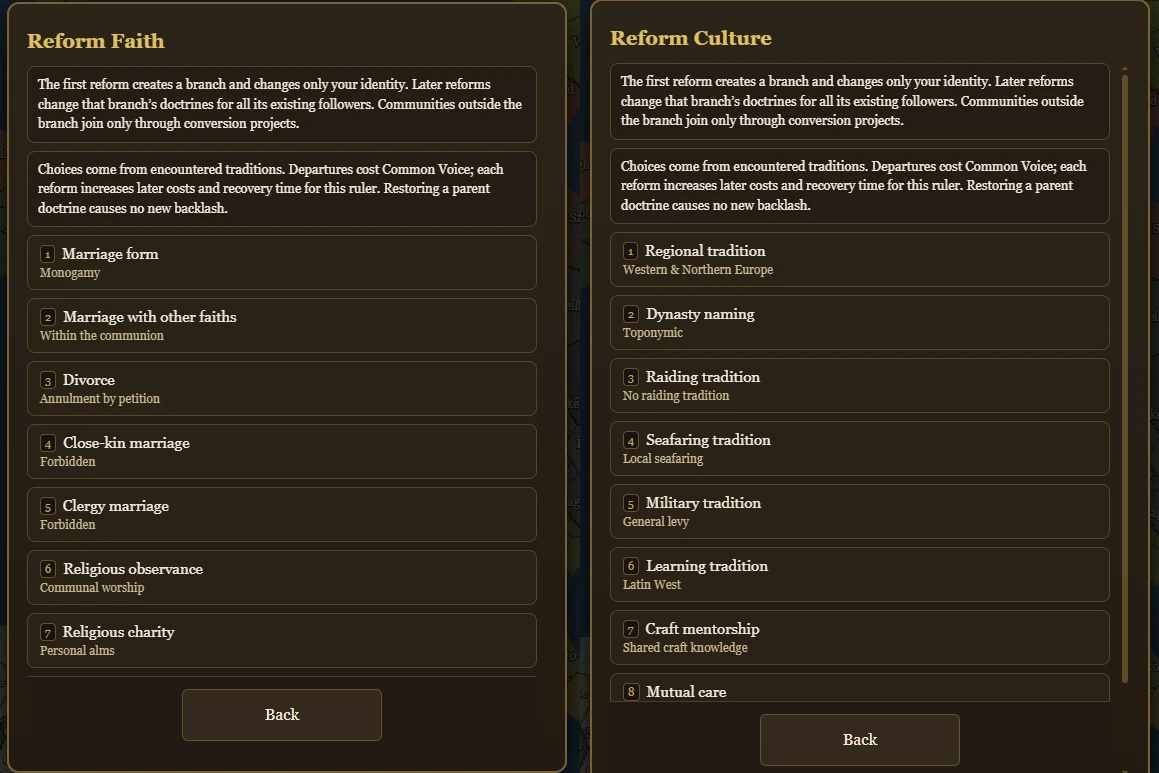
The first reform creates a branch and changes only your character's identity. Later reforms change that branch's doctrines for its existing followers. Repeated reforms increase costs and recovery time, and departures bring Common Voice backlash. Faith reforms cover marriage rules, divorce, observance, and charity; culture reforms include naming, raiding, seafaring, military and learning traditions, craft mentorship, and mutual care.
Counties and settlements now preserve their own live culture and faith shares. Conversion projects spread an identity gradually, with territorial benefits following local adoption. Manage those projects from Land; changing your own faith or culture does not instantly change everyone who lives there.
Dynastic marriages
Use Seek a match in Deeds to choose local prospects or a dynastic search. The search starts with your realm and neighboring courts. Filters let you widen it to all courts or narrow candidates by age, faith, rank, availability, and heir status.
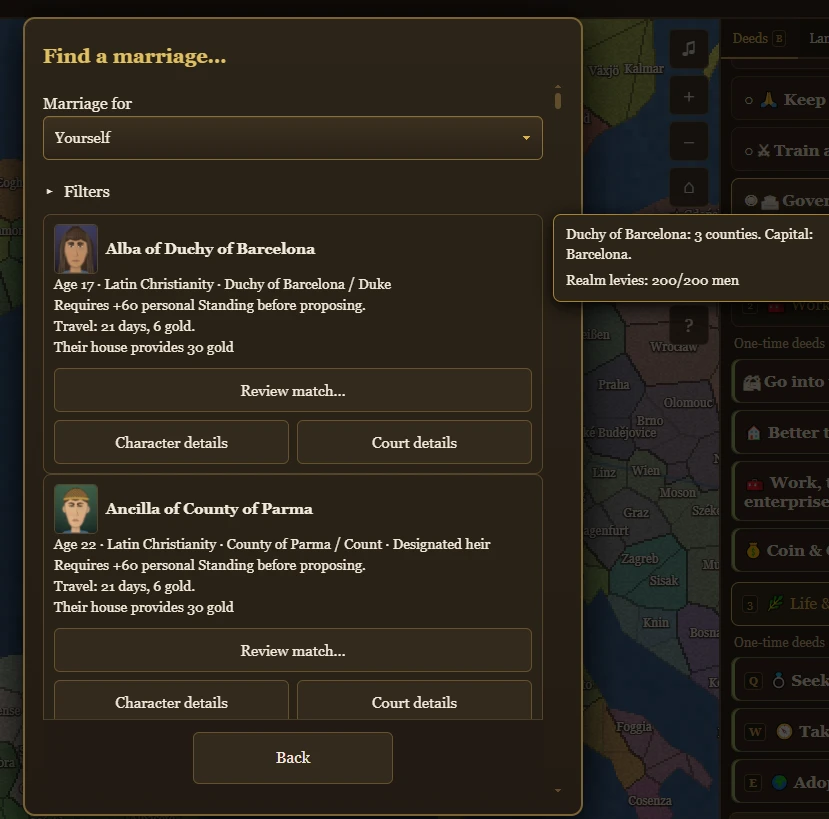
Candidate cards show personal Standing requirements, travel time and cost, household terms, and links to character and court details. Returning from a review preserves your filters and place in the list.
Where both cultures permit it, a proposal can specify maternal lineage. Eligible prospects can also be invited to adopt your culture before a separate marriage proposal. Betrothals can begin in infancy and be ended before the wedding. Family marriages can strengthen alliance negotiations, but do not create an alliance automatically.
Map filters
The map-filter control now opens a direct chooser for Realm, Mine, Liege, Duchies, Kingdoms, and War. Unavailable views explain their requirements in place.
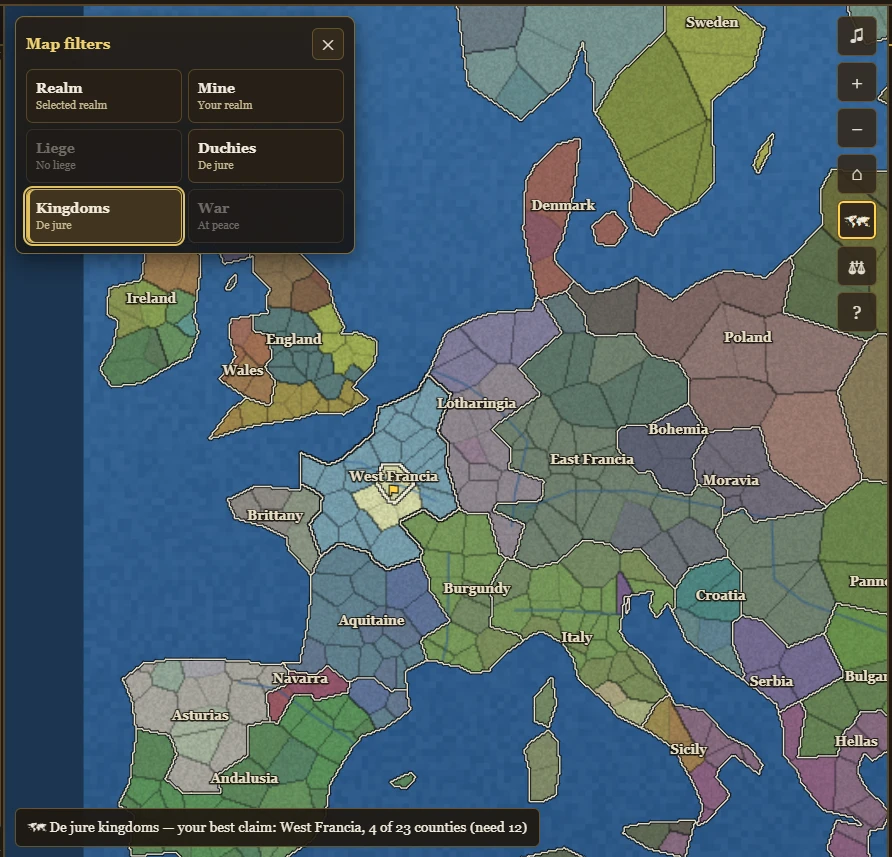
De jure views draw title borders and names that adapt to zoom. The chooser stays open while you pan, making it easier to inspect a duchy or kingdom before changing views.
Historical armor and weapons
Regional equipment availability now follows the year, local culture, and completed technologies. The additions include mail, lamellar, and plate armor alongside historical weapons. Knightly outfits have matching helmets and armored footwear, including the bascinet and plate sabatons shown below.
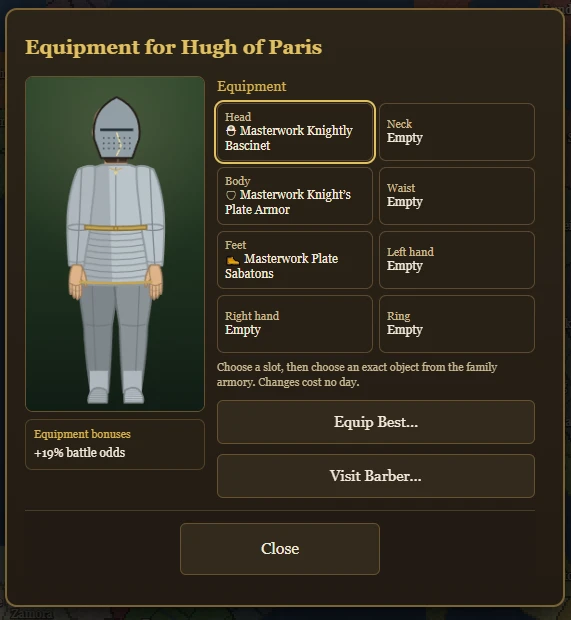
Market stalls and peddlers carry Plain and Well-made military equipment; auctions can offer Masterworks. Existing items remain usable when availability changes. Open Equipment from Self to assign pieces from the shared family armory and review their bonuses.
Other changes
- War and peace: Peace agreements create mutual truces and require confirmation. Personal campaigns remain separate from a liege's wars. Siege and supply feedback is clearer, and blockades restrict recruitment.
- Local people: Settlement sheets and Network show local residents, their occupations, relationship status, and navigable households.
- Rank and rule: Rank advancement opens an investiture review with requirements, costs, and benefits. Old random events no longer grant household rank. Land and Governance provide clearer levy contributions, and AI expansion favors compact de jure territories.
- Controls and performance: Settings can keep time paused after an event. Home returns lower-rank characters to their home settlement. Dialogs retain their place on Back, and seasonal fast-forward avoids repeated simulation work.
Fallowborn is a free browser grand strategy game by one developer, built openly with AI assistance. Source on GitHub.